
Study Abroad Checklist for First-Time Students | GHCED

  • Home
  • Education
  • Study Abroad Checklist for First-Time Students | GHCED

Study Abroad Checklist for First-Time Students: Everything You Need to Prepare Before Moving Abroad

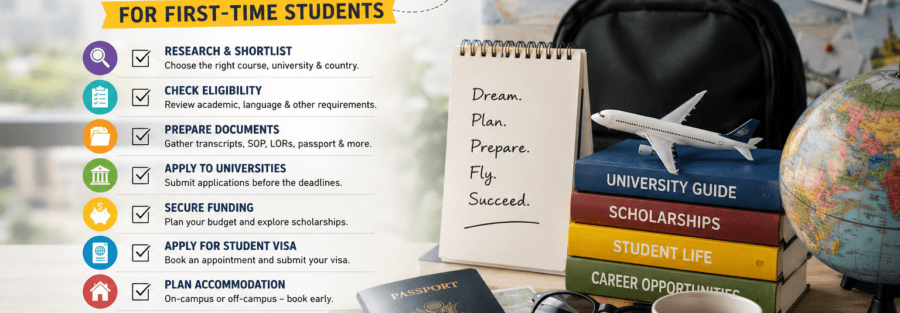
Studying abroad is one of the most exciting milestones in a student’s life. It is not just about earning an international degree; it is also about experiencing a new culture, meeting people from around the world, becoming independent, and building a successful global career. However, the journey involves much more than simply receiving a university admission letter. There are several important steps that students must complete before boarding their flight.
Many first-time students feel overwhelmed because there are numerous tasks to manage, including university admissions, student visas, accommodation, financial planning, travel arrangements, and document preparation. Missing even a single requirement can create unnecessary stress or delay your travel plans.
This is why preparing a proper checklist before leaving India is extremely important. A well-organised plan helps students complete every stage of the process on time and ensures a smooth transition to their new country.

At GHCED, we have guided many students through their overseas education journey. As a trusted provider of Study Abroad Consulting in Chennai, we understand the common challenges students face before travelling abroad. In this guide, we have created a complete checklist that every first-time international student should follow before beginning their study abroad journey.

Confirm Your University Admission

The first step after receiving an offer letter is to carefully verify all the details mentioned by your university. Students should confirm the course, intake, tuition fees, campus location, reporting date, and payment deadlines before accepting the admission offer.
Many universities issue either a conditional or unconditional offer letter. If your admission is conditional, you must complete all pending requirements before receiving your final admission confirmation. Delaying this process may affect your visa application and travel schedule.
Once the admission is confirmed, students should safely store both digital and printed copies of all university documents. These documents will be required during the visa application process and may also be requested by immigration authorities after arrival.

Students planning to pursue higher education through our Education in UK programs should carefully review their university’s admission guidelines, payment deadlines, and orientation schedule before proceeding to the next stage.

Apply for Your Student Visa Early

A student visa is one of the most important documents required to study abroad. Every country follows its own visa procedures, eligibility requirements, and processing timelines. Therefore, students should begin their visa application immediately after receiving confirmation from their university.
The visa application process usually involves submitting academic documents, financial proof, passport details, English language test scores, biometric information, and other supporting documents. Some countries may also require students to attend visa interviews or complete medical examinations.
Waiting until the last moment to apply for a visa can be risky because processing times may vary depending on the country and application season. Applying early gives students enough time to respond if additional documents or clarifications are requested by immigration authorities.

Our team at GHCED helps students prepare complete visa documentation, reducing the chances of delays or application errors. With professional Study Abroad Consulting in Chennai, students can confidently complete the visa process without unnecessary stress.

Organise All Important Documents

Before travelling abroad, students should organise every important document in both printed and digital formats. Keeping documents properly arranged makes the immigration process much smoother and prevents last-minute confusion.
Apart from your passport and student visa, you should keep your university admission letter, tuition fee receipts, academic certificates, English language test scores, accommodation details, travel insurance, passport-size photographs, and emergency contact information safely stored.
It is also advisable to upload scanned copies of these documents to secure cloud storage so they remain accessible even if physical copies are misplaced during travel.
Maintaining a dedicated document folder ensures that every important paper is available whenever required during university registration, immigration checks, or accommodation verification.

Plan Your Study Abroad Budget

Financial planning is one of the most important responsibilities for every international student. While tuition fees form a major part of your expenses, students should also calculate accommodation costs, food, transportation, health insurance, mobile bills, internet charges, books, and personal expenses.
Preparing a monthly budget before travelling helps students understand how much money they will need after arriving in their destination country. Families should also discuss emergency financial arrangements in case unexpected expenses arise during the course.

Students considering universities through our Education in Canada page often compare tuition fees, scholarship opportunities, and living expenses before selecting their preferred institution. Careful financial planning at this stage helps avoid unnecessary financial pressure later.

A realistic budget not only provides peace of mind but also allows students to focus completely on their academics after reaching their destination.

Arrange Your Accommodation Before You Travel

Finding the right accommodation is just as important as choosing the right university. A comfortable and safe place to stay helps students settle quickly into their new environment and focus on their studies without unnecessary stress.
Most universities offer on-campus accommodation for international students during their first semester. These residences are often the preferred option because they are located close to the university, provide good security, and give students an opportunity to meet classmates from different countries. Living on campus also makes it easier for first-time students to adjust to a new country and university life.
Some students may prefer private accommodation or shared apartments because they offer greater flexibility and can sometimes be more affordable. Before finalising any accommodation, students should check the distance from the university, availability of public transportation, nearby grocery stores, internet facilities, and the overall safety of the neighbourhood.

If you are planning to study through our Education in Australia programs, it is advisable to arrange your accommodation before travelling so that you can move in immediately after arriving. This avoids unnecessary hotel expenses and provides peace of mind during your first few days abroad.

Book Your Flight at the Right Time

After your student visa has been approved, the next important step is booking your flight. Many students wait until the last minute, which often results in expensive airfare and limited travel options. Booking your flight several weeks in advance usually allows you to secure better prices and choose a more convenient travel schedule.
While selecting your flight, make sure you check the baggage allowance, transit requirements, arrival airport, and university reporting date. If your university has arranged airport pickup services, you should also inform them of your travel details in advance.
It is generally recommended that students arrive a few days before the commencement of classes. This gives enough time to settle into accommodation, become familiar with the local surroundings, complete university registration, and recover from travel fatigue before academic sessions begin.
Careful travel planning ensures a smoother transition and helps students begin their overseas education journey with confidence.

Purchase Health Insurance

Health insurance is a mandatory requirement for international students in many countries. Medical treatment abroad can be expensive, and having proper insurance protects students from unexpected healthcare expenses during their stay.
Depending on the country, students may be required to purchase government-approved health insurance or enrol in a university-recommended healthcare plan before travelling. Some universities automatically include health insurance as part of the tuition package, while others ask students to arrange it independently.
Apart from meeting visa requirements, health insurance provides access to medical consultations, emergency treatment, hospital care, and other healthcare services whenever required. Students should carefully understand what their insurance policy covers before travelling abroad.
Our team at GHCED guides students through every stage of the admission process, including understanding mandatory health insurance requirements for different study destinations.

Pack Smart and Carry Essential Items

Packing for international education requires careful planning. Instead of carrying unnecessary items, students should focus on essentials that will help them settle comfortably during the first few weeks.
Important documents should always be packed in hand luggage so they remain easily accessible during immigration checks. Students should also carry essential medicines with valid prescriptions, a universal travel adapter, weather-appropriate clothing, basic toiletries, and a small amount of local currency for immediate expenses after arrival.
Many everyday items can be purchased after reaching your destination, so there is no need to overload your luggage. Before packing, students should also check airline baggage restrictions to avoid paying additional charges at the airport.Similarly, Canadian universities offer entrance scholarships, research grants, bursaries, and financial aid for eligible students. Some scholarships cover tuition fees, while others also contribute towards accommodation and living expenses.
Preparing a simple packing checklist well in advance helps students avoid last-minute confusion and ensures that nothing important is forgotten before departure.

Open an International Bank Account and Plan Your Finances

Managing finances efficiently is an important part of student life abroad. Before travelling, students should discuss international banking options with their family and understand how they will access funds after reaching their destination country.
Many students choose to carry an international debit card or a forex travel card during their initial journey. After arriving, opening a local student bank account makes it easier to receive funds, pay rent, manage daily expenses, and avoid unnecessary international transaction charges.
Students should also create a monthly spending plan that covers accommodation, groceries, transportation, study materials, entertainment, and emergency expenses. Responsible financial management during the first few months abroad helps students avoid unnecessary financial pressure later.

Students exploring opportunities through our Education in Ireland page often receive guidance on estimated living expenses and financial planning before starting their overseas education journey.

Learn About the Country Before You Travel

Moving to a new country is much easier when you understand its culture, lifestyle, and everyday practices before you arrive. Spending some time learning about local customs, transportation systems, weather conditions, banking facilities, healthcare services, and university regulations can help students adapt more quickly.
Students should also familiarise themselves with emergency contact numbers, local laws, and university support services available for international students. Understanding cultural differences helps avoid misunderstandings and makes communication with local residents much easier.
Most universities organise orientation programs for new international students. Participating in these sessions provides valuable information about campus facilities, academic expectations, student clubs, accommodation support, and local community resources.
Preparing yourself mentally for a new environment is just as important as preparing your documents. A positive attitude, willingness to learn, and confidence in meeting new people will make your study abroad experience much more enjoyable and rewarding.

Stay Connected with Your University

After completing your admission and visa process, many students assume that there is nothing left to do until they travel. However, staying connected with your university before departure is equally important. Universities regularly send important updates regarding orientation programs, class schedules, accommodation instructions, document verification, and registration deadlines through email.
Students should check their email frequently and respond promptly if the university requests any additional documents or information. Missing important communication may result in unnecessary delays after arriving at the campus.
Many universities also provide online orientation sessions before students travel. Attending these sessions helps students understand academic expectations, campus facilities, student support services, and important university policies. It also gives students an opportunity to interact with faculty members and fellow international students before reaching their destination.

If you are planning to study through our Education in USA programs, staying updated with your university’s communication is especially important, as many institutions have detailed pre-arrival procedures for international students.

Prepare Yourself Mentally for Life Abroad

Studying abroad is not just an academic journey—it is also a personal transformation. For many students, it is the first time they are living away from their family, managing daily responsibilities independently, and adapting to a completely new culture.
During the first few weeks, it is natural to feel homesick, nervous, or overwhelmed. However, these feelings gradually disappear as students begin attending classes, making new friends, and exploring their surroundings. Having a positive mindset and being open to new experiences will make this transition much easier.
Students should remember that studying abroad is an opportunity to develop confidence, improve communication skills, and become more independent. Participating in university events, joining student clubs, and interacting with classmates from different countries can help build meaningful friendships and create unforgettable memories.

At GHCED, we always encourage students to approach their overseas education journey with confidence and a willingness to learn. A positive attitude often makes the biggest difference in adapting successfully to a new environment.

Keep Emergency Contacts Ready

Although students hope everything goes smoothly, it is always wise to prepare for unexpected situations. Before travelling, students should save important contact numbers both on their mobile phone and in a printed notebook.
These contacts should include the university’s international student office, accommodation provider, local emergency services, Indian Embassy or Consulate, family members, and close relatives. Students should also share their travel itinerary, accommodation address, and contact details with their family before leaving India.
Keeping these details easily accessible provides additional security and helps students respond quickly if they require assistance after reaching their destination.

Why Choose GHCED for Study Abroad Consulting in Chennai?

Preparing to study abroad involves much more than securing admission to a university. Students must carefully plan their finances, prepare visa documents, arrange accommodation, understand travel requirements, and complete several important formalities before departure.
At GHCED, we simplify this entire process by providing personalised guidance at every stage of your study abroad journey. As a trusted provider of Study Abroad Consulting in Chennai, our experienced counsellors help students choose the right course, shortlist suitable universities, prepare strong applications, and successfully complete their student visa process.
Our support does not end with university admission. We also assist students with scholarship guidance, financial planning, visa documentation, accommodation advice, pre-departure preparation, and post-arrival guidance. Our goal is to ensure that every student feels confident and fully prepared before beginning their international education journey.

Students who are still exploring different destinations can also visit our Education in New Zealand page to learn more about universities, tuition fees, career opportunities, and admission requirements. Along with destinations such as the UK, Canada, Australia, Ireland, and the USA, New Zealand has become an excellent option for students seeking high-quality education and global career opportunities.

Conclusion

Studying abroad is one of the most rewarding decisions a student can make, but success begins with proper preparation. Completing every step on time—from confirming your university admission and obtaining your student visa to arranging accommodation and managing your finances—helps you start your international education journey with confidence.
A well-planned checklist not only reduces stress but also ensures that you are fully prepared for the opportunities and challenges of living in a new country. Taking the time to organise your documents, understand your destination, and prepare mentally will make your transition much smoother.

If you are planning to study overseas and need professional guidance, GHCED is here to help. As a trusted provider of Study Abroad Consulting in Chennai, we offer end-to-end support for students, from choosing the right university to visa assistance and pre-departure preparation. With the right guidance and careful planning, your dream of studying abroad can become a successful and life-changing reality.

Frequently Asked Questions
1. When should I start preparing for my study abroad journey?
It is recommended to begin your preparation at least six to twelve months before your preferred intake. This gives you sufficient time for university applications, visa processing, financial planning, and accommodation arrangements.
A valid passport, university admission letter, and approved student visa are the most essential documents. Students should also keep copies of their academic records, financial documents, and health insurance details.
Yes. Booking your accommodation before departure is always advisable, especially if you are travelling abroad for the first time. It provides peace of mind and helps you settle quickly after arrival.
Absolutely. GHCED offers complete Study Abroad Consulting in Chennai, including career counselling, university selection, admission guidance, scholarship assistance, visa support, accommodation advice, and pre-departure guidance.
The initial days may feel challenging, but with proper preparation, planning, and guidance, students usually adapt quickly and enjoy an enriching academic and personal experience.

Disclaimer:

The information provided in this article is for general informational purposes only and is subject to change without prior notice.


Leave A Comment